Winning the algorithm: How Hospitality brands stay discoverable in an AI-driven dining landscape

Angie Elsley
Angie Elsley is Open Partners' Growth Director, with over 30 years' experience in scaling ambitious brands.
For hospitality leaders, the shift to AI-driven discovery is a structural change in how restaurants are found, judged and chosen. When diners rely on AI summaries, Maps recommendations or voice assistants to decide where to eat, the traditional levers of visibility lose power. The result is a new competitive landscape where discoverability is determined by algorithms long before a guest reaches your website or booking engine.
In a sector already under margin pressure, brands that treat AI as an add-on will fall behind. Visibility gaps quickly become revenue gaps. Reactive marketing is no longer enough.
A proactive strategy that aligns AI search, paid media automation and high-performing creative into one growth system is now essential. This guide outlines how hospitality and leisure brands can do exactly that, and how Open Partners helps leadership teams turn AI disruption into commercial advantage.
The new discovery reality for dining
What’s changed with AI search and recommendations?
Discovery has shifted from a consumer-led process to an AI-led one. Guests increasingly ask assistants for recommendations, rely on Maps to filter choices, or receive generative summaries that shortlist options for them. The journey is shorter, more consolidated and shaped heavily by machine learning.
Instead of browsing multiple venues, diners are presented with a curated selection driven by signals they never see. Cuisine relevance, proximity, past behaviour, sentiment, images, menus and external authority now influence whether your restaurant appears at all.
Why entity accuracy and authority matter more than ever
In this ecosystem, your restaurant is treated as a data entity. Every detail contributes to how AI understands your offering. Incomplete, inconsistent or outdated information can reduce your discoverability long before a booking decision is made.
Authority also plays a critical role. AI surfaces draw on third-party sources such as listings, guides and review platforms to validate what you say about yourself. Strong external credibility has become a determining factor in whether your brand is recommended or overlooked.
Visibility is earned through clarity, consistency and trust. For leadership teams, these are now commercial priorities.
From SEO to GEO for restaurants
Generative AI has reshaped search. Traditional SEO, focused on ranking links, now competes with AI systems that synthesise answers and recommend venues directly. GEO is about ensuring your restaurant is understood, trusted and surfaced inside these responses.
Here’s how to achieve that:
Make content machine ready
AI systems interpret structured, consistent information far more effectively than loosely presented content. Restaurants that present clear, well-structured data are more likely to be included when generative engines assemble recommendations.
Build authority across every platform
Your visibility is influenced by your presence across the wider ecosystem: city guides, listings platforms, booking partners, editorial coverage and reviews. AI engines treat these external signals as proof points, making broad authority a competitive asset.
Align with voice and assistant behaviour
Voice queries are conversational and context-rich. Restaurants whose content mirrors natural search behaviour are more likely to be surfaced by assistants, especially in time-sensitive “near me” moments.
Establish AI discovery as an exec-level priority
This is not a tactical update. It is a strategic step change that determines market presence, guest acquisition and long-term demand. Those who move early will benefit most as AI-driven discovery continues to evolve.
Local and mobile signals that move the needle
Local discovery now happens in moments, and often on mobile. For hospitality brands, local optimisation is no longer a hygiene factor. It is a direct revenue driver.
Here’s why:
Your local profile has become a strategic asset
AI systems continuously re-evaluate local listings. Completeness, accuracy and consistency influence placement in Maps, local packs and generative summaries. Strong local profiles translate into real-world footfall and bookings.
The mobile journey is now the dining journey
Most restaurant searches happen on mobile and with high intent. Slow sites, unclear content or multi-step reservation flows create friction that both users and algorithms penalise. Experience now shapes visibility.
Reputation signals influence trust and ranking
Reviews and sentiment patterns are central ranking signals. AI relies on these indicators to gauge quality and predict guest satisfaction. Reputation management is no longer optional. It is performance-critical.
Location behaviour shapes demand
AI considers a diner’s context: where they are, what time it is and what similar users have done before. Understanding these behavioural patterns informs more resilient growth strategies across cities and times of day.
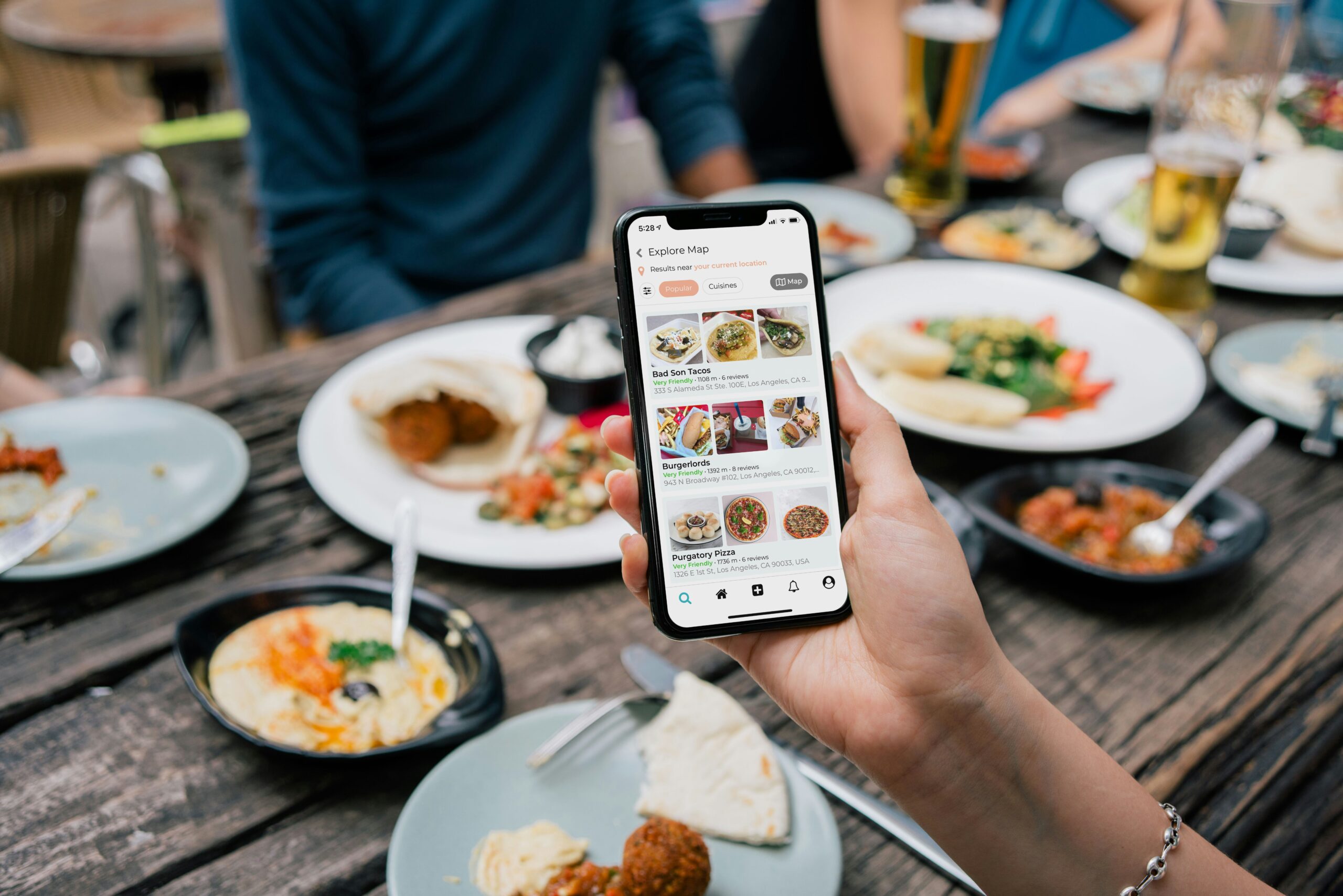
AI-led PPC outperforms legacy strategies
Paid media has evolved into a machine-learning environment where platforms optimise towards predicted outcomes rather than manual inputs. When structured correctly, this improves efficiency. Otherwise, it wastes spend.
Here’s why:
First-party data is now the engine of growth
With the decline of third-party identifiers, the most valuable performance asset is the data you collect directly through bookings, CRM and loyalty. When shared responsibly with ad platforms, it helps models identify high-value audiences and optimise more precisely.
Value-based bidding changes the economics of marketing
Modern bidding strategies focus on revenue outcomes rather than generic conversions. For hospitality, where margins vary by menu, experience or location, this approach helps direct media towards the customers and actions that drive profitability.
Automation still requires strategy
Tools like Performance Max and responsive ad formats reduce tactical controls but increase the need for strategic structure. How creative is grouped, how values are assigned and how signals are fed all shape the outputs of machine-learning systems.
Small gaps create large inefficiencies
Misaligned goals, missing values or weak creative coverage can distort platform behaviour. These issues compound quietly over time, making governance essential to protect investment.
Creative as a scalable ROI lever
Creative now acts as a performance multiplier. Platforms assemble and test combinations of assets automatically, and success is determined by the breadth and quality of what you supply.
Here’s why:
Creative variety drives learning
Algorithms optimise best when they have options. A wide mix of visuals, messages and formats gives platforms the ability to understand what resonates with different audiences, locations and moments.
Modular creative accelerates testing
Building creative from repeatable components such as hooks, offers and calls to action allows for rapid iteration without losing brand integrity. This approach is well suited to hospitality, where context is constantly shifting.
Personalisation is finally practical
Dynamic Creative Optimisation allows ads to adapt to real-world conditions. Lunchtime audiences near offices, warm weather seekers, families at weekends or visitors near transport hubs can all receive different creative in real time.
Quality still shapes conversion
Automation does not replace the fundamentals. Strong photography, clear proposition messaging and accurate location cues still influence both cost efficiency and guest decision-making.
Measurement, governance and next steps
With AI shaping the discovery journey, the metrics that matter have evolved. Success is now about visibility, conversion and efficiency across surfaces you do not fully control.
Here’s what to do next:
Track the signals that reflect real performance
Traditional click-based metrics underrepresent what drives bookings today. More meaningful indicators include inclusion in AI surfaces, booking conversion rate, cost per booking and revenue efficiency.
Experiment to sharpen strategies
Behaviour shifts quickly. Geo-split tests, holdouts and structured experiments reveal what genuinely influences demand across markets, moments and media mixes.
Improve AI governance to prevent performance drifts
Automation is powerful but sensitive to poor inputs. Monitoring data accuracy, creative freshness, goal alignment and platform behaviours protects your investment.
Prepare for what’s next
Generative search, predictive recommendations and richer AI experiences will continue to evolve. Brands with strong data foundations and proactive optimisation habits will stay ahead of the curve.
Why Open Partners
Hospitality brands are operating through one of the most significant shifts in digital behaviour in years. Winning in an AI-driven discovery landscape requires a fully integrated approach that connects Media, Creative and Data. This is the foundation of the Open Partners model.
We are also extensively experienced in delivering truly transformative business outcomes for hospitality and leisure businesses, including a leading UK pub chain and a multinational cinema chain.
Our core offering is smarter, faster, and better. Here’s why:
We convert AI complexity into commercial clarity
We offer structure and transparency in the way we work, helping leadership teams understand what drives discoverability and where the most valuable levers are.
Integrated expertise designed for ambitious brands
We unite AI search specialists, performance media practitioners, creative strategists and data engineers into one team. That integration reflects how platforms work today and gives brands a competitive advantage across all discovery channels.
Practical pathways from audit to acceleration
Whether your priority is improving GEO readiness, implementing value-based bidding or scaling performance creative systems, we create fast, structured programmes that deliver clarity and capability.
Built for brands who want to lead, not chase
The hospitality brands that succeed next will be those who treat AI as strategic infrastructure. We help you do exactly that, with a commercial mindset and measurable outcomes at the centre.
To discuss your growth ambitions, challenges, and to learn more about our integrated, AI-led solutions, contact us below.